

Welcome to Week 3 of Camp Runamuck, campers.
This week, we are heading onto the trail with one of the most underrated nutrition powerhouses: fiber.
I know. Fiber does not always get the sparkly reputation it deserves. Protein gets the gym selfies. Electrolytes get the fancy packets. Carbs get the dramatic internet debates. Fiber is often standing in the corner like, “Hi, I help with digestion, fullness, blood sugar, cholesterol, gut health, and long-term wellness, but sure, please continue arguing about whether a banana is good.”
Justice for fiber.
This week’s theme is Fiber on the Trail, and our camp phrase is simple:
Put some plants in your pack.
That does not mean you need to become a salad influencer, live on steamed broccoli, or be lectured by a kale leaf wearing a whistle. It means we are looking for small, doable ways to add more fiber-rich foods into your day: berries, beans, lentils, veggies, oats, chia, flax, avocado, nuts, seeds, whole grains, apples, roasted chickpeas, colorful salads, and snack plates that actually have some staying power.
Fiber is especially helpful for active women and middle-aged women because it supports so many of the things we care about: digestion, energy, fullness, gut health, heart health, cholesterol support, blood sugar steadiness, and feeling more satisfied between meals. And when hormones, recovery, appetite, sleep, and body composition start shifting in perimenopause and postmenopause, these steady little nutrition habits can become even more important.
This is not about restriction.
This is about adding support.
What Is Fiber, and Why Should Active Women Care?
Fiber is a type of carbohydrate found in plant foods that your body does not fully digest. Instead of being quickly broken down and absorbed like some other carbohydrates, fiber moves through the digestive system and does a lot of behind-the-scenes work along the way.
There are two main types of fiber: soluble fiber and insoluble fiber.
Soluble fiber dissolves in water and forms a gel-like substance in the gut. This type of fiber is known for helping support steadier blood sugar and cholesterol levels. You can find soluble fiber in foods like oats, beans, lentils, apples, blueberries, chia seeds, nuts, and barley.
Insoluble fiber does not dissolve in water in the same way. It helps add bulk and keeps things moving through the digestive tract. You can find insoluble fiber in foods like whole grains, vegetables, nuts, seeds, fruit skins, and wheat bran.
But here is the coach translation: fiber helps your body feel steadier.
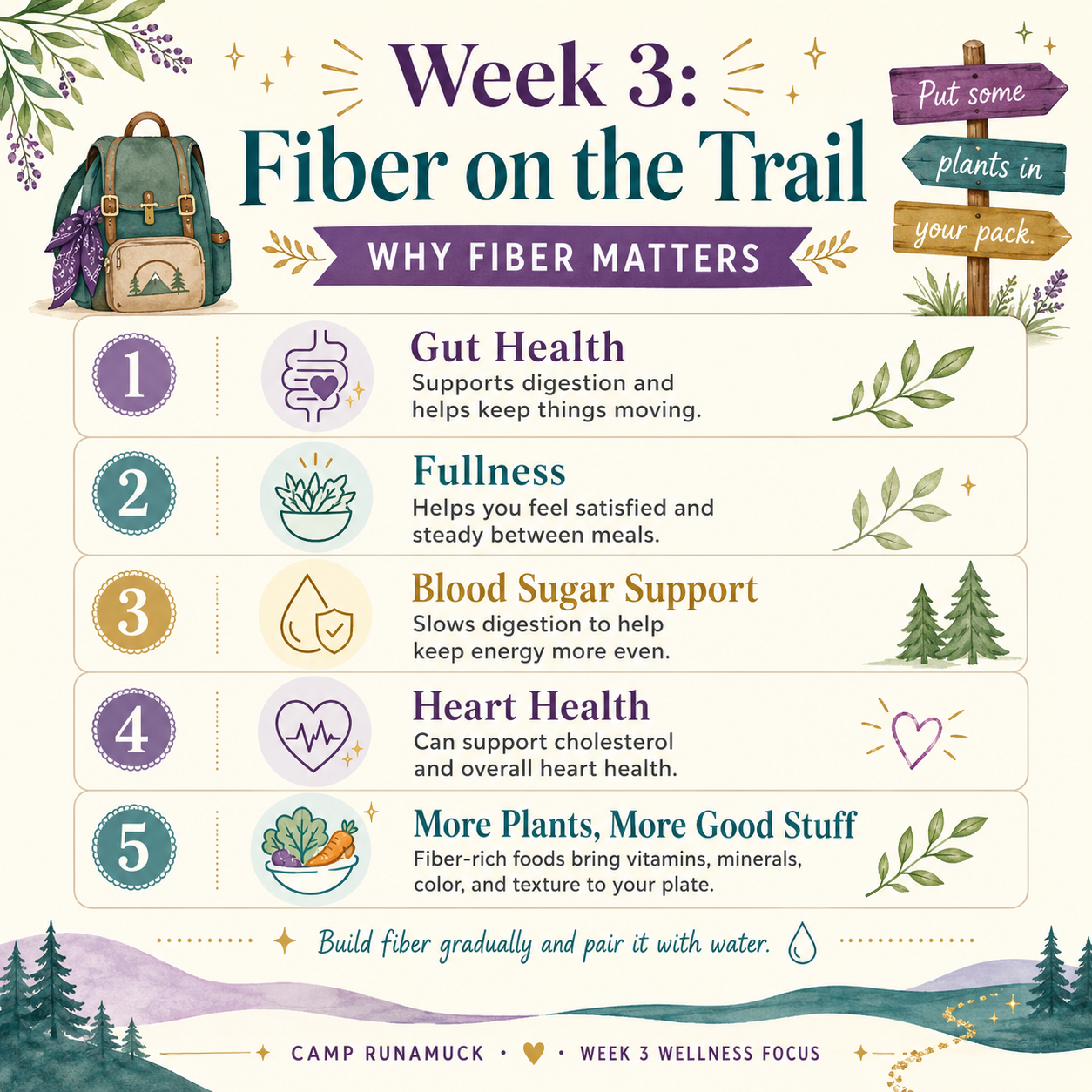
It helps meals last longer. It helps digestion move along. It helps your gut bacteria do their job. It helps your body handle the energy from meals in a more gradual way. It brings vitamins, minerals, antioxidants, color, texture, and satisfaction to your plate.
Basically, fiber is not just “bathroom talk.” Fiber is a whole wellness support crew in hiking boots.
Fiber and Fullness: Why Plants Help You Feel More Satisfied
One of the biggest reasons I love fiber for active women is that it helps with fullness and staying power.
A meal that includes fiber-rich foods often feels more satisfying than a meal that is mostly quick-digesting carbohydrates by themselves. That does not mean quick carbs are bad. We love easy fuel, especially around workouts. But for regular meals and snacks, adding fiber can help you feel more steady and satisfied.
Think about the difference between grabbing a plain piece of toast and building toast with peanut butter and berries. Or eating crackers alone versus crackers with hummus and veggies. Or having a bowl of yogurt versus yogurt with berries, granola, chia, and nuts.
Fiber adds volume, texture, and staying power.
For middle-aged women, this can be especially helpful because appetite cues, cravings, digestion, and body composition can start to feel a little different. Sometimes the answer is not “try harder.” Sometimes the answer is “make the meal more supportive.”
That might mean adding beans to a bowl, veggies to a sandwich, berries to breakfast, chia to oats, lentils to soup, or avocado to the side. We are not trying to make meals smaller and sadder. We are trying to make meals more useful.
Camp translation: if your snack has the staying power of a paper napkin in a rainstorm, it may need more fiber.
Fiber and Blood Sugar: Steadier Energy for the Trail
Fiber can also help support steadier blood sugar, which matters for energy, mood, and feeling less like you are riding the Snack Shack roller coaster.
When meals contain fiber, digestion generally slows down. This can help the energy from food enter your bloodstream more gradually instead of creating a quick spike and crash. For active women, this can be really useful because we are often balancing training, work, family, stress, errands, and movement throughout the day.
Steadier meals can lead to steadier afternoons.
This does not mean every meal needs to be perfectly balanced or that you need to fear carbohydrates. Quite the opposite. Carbohydrates are important for active women. The goal is to be strategic. Around workouts, especially before harder or longer efforts, lower-fiber quick carbs may be useful because they digest easily. But during regular meals, adding fiber-rich foods can help create more sustained energy.
So yes, have the oats. Add the berries. Toss beans into the salad. Put veggies on the wrap. Add lentils to soup. Use whole grain bread when it fits. Build a snack plate that has crunch, color, and staying power.
Fiber is not here to steal your joy.
Fiber is here to help your energy stop acting like it found a trampoline.
Fiber, Gut Health, and the Midlife Conversation
Let’s talk gut health, but let’s do it without pretending every bloated feeling means you need a 47-step protocol from someone on the internet holding celery juice.
Your gut is home to a huge community of microbes that influence digestion, immune function, inflammation, and overall health. Fiber-rich plant foods help feed beneficial gut bacteria, which then produce compounds like short-chain fatty acids. These compounds are part of why fiber-rich diets are associated with so many health benefits.
Dr. Stacy Sims often talks about nutrition for active women through the lens of female physiology, performance, and midlife changes. One of the themes in her plant-centered nutrition work is that plant diversity supports gut microbial diversity, and that gut health is part of the bigger picture for active women, especially during perimenopause and postmenopause.
Why does that matter at camp?
Because midlife is not just about one hormone or one habit. It is a whole ecosystem. Muscle, metabolism, gut health, inflammation, stress, sleep, training, and recovery are all connected. Protein matters. Strength training matters. Carbohydrates matter. Hydration matters. And yes, plants and fiber matter too.
Plant-forward eating gives you more than fiber. It brings vitamins, minerals, antioxidants, polyphenols, and different types of plant compounds that support overall health. You do not need to be fully plant-based to be plant-forward. You can eat eggs, yogurt, fish, chicken, turkey, or whatever protein sources fit your life and still build a plate with plants at the foundation.
This is why I love the phrase plant-forward.
It is not all-or-nothing.
It is not “you must eat this way forever.”
It is simply asking: how can I add more plants, color, texture, and fiber to what I already eat?
Fiber and Heart Health: A Quiet Powerhouse
Fiber also plays a role in heart health, which matters for all of us, but becomes especially important as women move through midlife.
Soluble fiber, especially from foods like oats, beans, lentils, apples, and chia seeds, can help support healthy cholesterol levels. Fiber-rich diets are also associated with better cardiovascular health overall, likely because they tend to include more whole grains, legumes, fruits, vegetables, nuts, and seeds.
This is one reason plant-forward eating can be so powerful. When you add more fiber-rich foods, you are often adding foods that are naturally nutrient-dense and connected to long-term health.
A bowl with lentils, greens, roasted vegetables, avocado, and quinoa is not just a bowl. It is fiber, protein, minerals, color, healthy fats, and satisfaction all showing up to the picnic table together.
A breakfast with oats, chia, berries, and Greek yogurt is not just “healthy breakfast.” It is fiber, protein, carbs, antioxidants, and staying power.
A snack plate with apple, peanut butter, veggies, hummus, and whole grain crackers is not just a snack. It is a small act of future-you care.
Tiny choices, repeated often, can build a very different trail.
How Much Fiber Do You Need?
A common general recommendation is around 25 grams of fiber per day for adult women, with women over 50 often seeing recommendations closer to 21 grams per day because general calorie intake may decrease. Another helpful guideline is about 14 grams of fiber for every 1,000 calories eaten.
Some plant-forward nutrition resources suggest adults aim for 25 to 35 grams per day, and Dr. Stacy Sims has written that active women may need upward of 28 grams of fiber per day.
Before anyone starts panic-counting chickpeas, take a breath.
You do not need to hit a perfect number tomorrow. Most people fall short on fiber, so even adding one fiber-rich food each day is a win. If your current intake is low, jumping suddenly to a very high-fiber intake can lead to bloating, gas, and digestive drama. And we do not need a digestive mutiny at camp.
The best way to increase fiber is gradually.
Add one thing.
Drink water.
Notice how your body responds.
Then build from there.
This is not a race to become the Fiber Queen of the Forest by Wednesday.
Important Camp Counselor Note: Timing Matters Around Workouts
Fiber is wonderful, but timing matters.
Before a harder run, interval workout, hill session, race, or long workout, you may not want a huge high-fiber meal right before you start. Fiber slows digestion, and while that is great for fullness during the day, it may not feel amazing if you are running hard or bouncing around 30 minutes later.
So here is the simple version:
Before harder workouts: keep fiber lighter and choose easier-to-digest carbs.
After workouts and at regular meals: bring the plants back in.
On rest days and easy movement days: fiber-rich meals can be a great support.
For example, before a hard workout, you might choose toast with honey, a banana, applesauce, pretzels, or a simple granola bar. Later, you can add your oats, berries, beans, veggies, chia, lentils, or whole grains.
Fiber is not bad before movement, but the amount and timing matter. Your stomach gets a vote.
And if your stomach votes “absolutely not,” we listen.
Easy Ways to Add Fiber Without Overhauling Your Life
This week’s habit goal is simple:
Add one fiber-rich food each day.
That is it.
Not seven new recipes. Not a full pantry renovation. Not a dramatic breakup with every food you enjoy.
Just one fiber add-in.
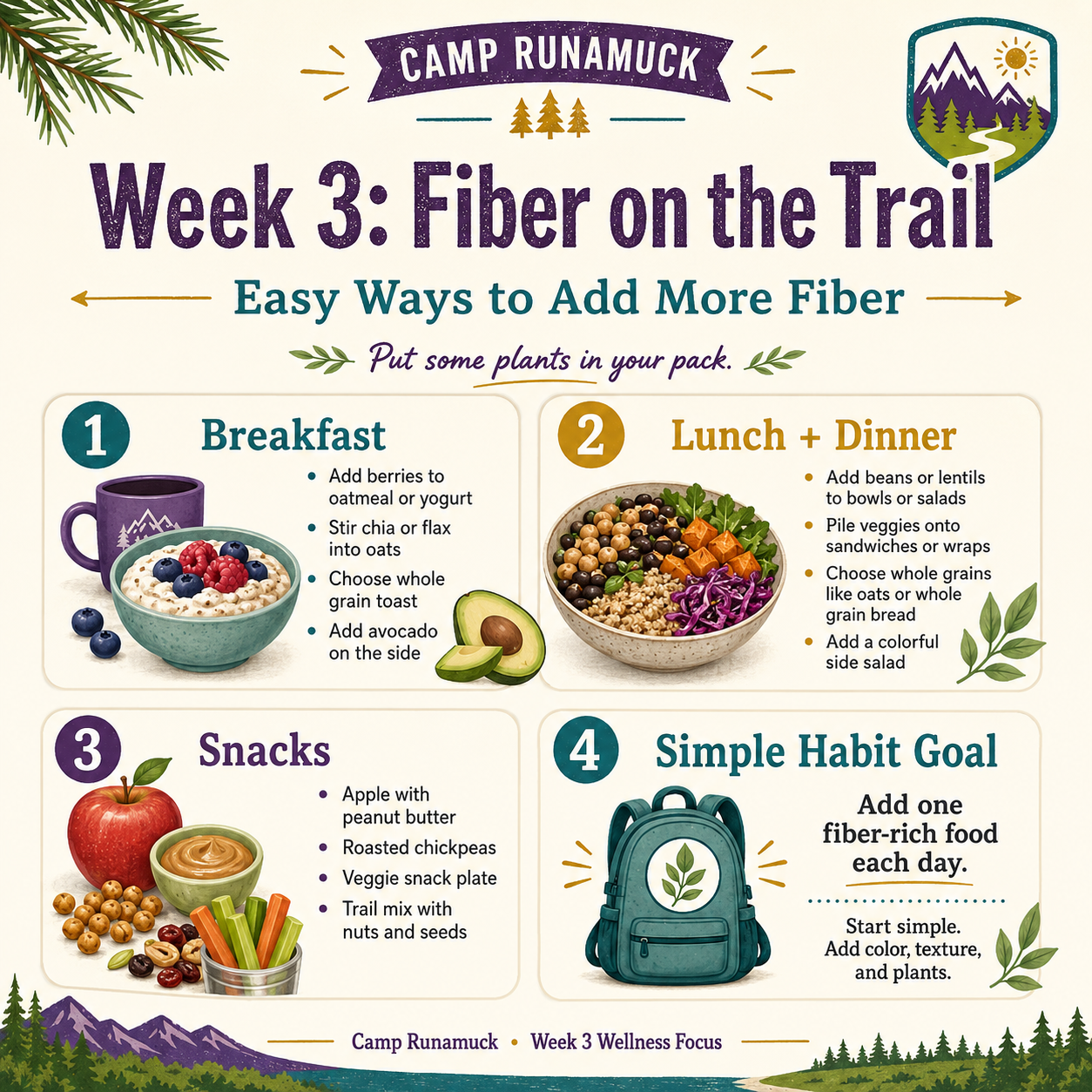
Here are some easy ways to do it.
At breakfast, add berries to oatmeal or yogurt. Stir chia or flax into oats, smoothies, or Greek yogurt. Choose whole grain toast. Add avocado on the side. Use oats instead of a lower-fiber cereal. Add nuts or seeds for crunch.
At lunch or dinner, add beans or lentils to bowls, soups, salads, or wraps. Pile veggies onto sandwiches. Choose whole grains like oats, brown rice, quinoa, farro, barley, or whole grain bread. Add a colorful side salad. Toss roasted vegetables onto whatever you were already eating.
At snack time, try apple with peanut butter, roasted chickpeas, veggies with hummus, trail mix with nuts and seeds, berries with yogurt, whole grain crackers, popcorn, or a snack plate with fruit, vegetables, protein, and crunch.
The goal is not to eat the “perfect” fiber food. The goal is to make fiber easier to repeat.
Build Fiber Gradually and Pair It With Water
This part matters.
If you suddenly go from very little fiber to beans, berries, chia, lentils, oats, and raw veggies all in one day, your digestive system may send a strongly worded letter.
Build gradually.
Start with one add-in per day. Give your body time to adjust. Spread fiber across meals instead of trying to cram it all into one heroic bowl. Pair fiber with fluids. This helps fiber move through the digestive system more comfortably.
If you have IBS, IBD, gastroparesis, a history of bowel surgery, active GI symptoms, or a medical condition that affects digestion, it is worth talking with a registered dietitian or medical provider before making major fiber changes. Fiber is helpful for many people, but the type, amount, and timing can be very individual.
Camp Counselor translation: plants are powerful, but we still do not ambush the gut.
Fiber and Protein Can Be Friends
Since Week 2 was Protein at the Picnic Table, let’s connect the dots.
Fiber and protein together can make meals more satisfying and supportive.
Greek yogurt with berries and chia.
Eggs with whole grain toast and avocado.
Turkey wrap with veggies and fruit.
Tofu stir-fry with brown rice and vegetables.
Salmon bowl with greens and beans.
Lentil pasta with added protein.
Cottage cheese with fruit and nuts.
Edamame with a grain bowl.
Bean chili with Greek yogurt on top.
This combination can help support fullness, recovery, steady energy, and overall nutrition quality.
One of the best upgrades you can make is asking:
Where is my protein, and where is my plant?
That question alone can turn a snack or meal from “technically food” into actual support.
Coach Christine’s Fiber on the Trail Challenge
This week, I want you to choose one simple fiber add-in each day.
Pick from the trail map:
Add berries to breakfast.
Stir chia or flax into yogurt or oats.
Add beans or lentils to a salad or bowl.
Pile veggies onto a sandwich or wrap.
Eat an apple with peanut butter.
Choose whole grain toast or oats.
Add avocado, nuts, or seeds.
Try roasted chickpeas.
Build a colorful side salad.
Make a veggie snack plate.
Add a plant to whatever you were already eating.
Then notice what happens.
Do you feel more satisfied?
Does your snack hold you longer?
Does your digestion feel better?
Does your energy feel steadier?
Do you feel less snacky later?
Did adding plants make your meal more interesting?
That is the work this week.