Welcome to Week 2 of Camp Runamuck, campers.
This week, protein gets a proper seat at the picnic table.
We are focusing on adding protein to support recovery, strength, energy, staying power, and the kind of “I can actually show up for my next workout” feeling that makes consistency so much easier. This is not about diet culture, restriction, or turning every meal into a math exam with a side of cottage cheese. This is about giving your body the building blocks it needs to repair, recover, adapt, and keep moving through real life.
And for active women, especially women navigating perimenopause and postmenopause, protein is not just “nice to have.” It becomes one of the key players at camp.
Think of protein as the reliable cabin mate who actually read the packing list. It helps repair muscle after workouts, supports immune function, helps with satiety, contributes to healthy connective tissue, and plays a role in maintaining lean muscle mass. If you are walking, running, strength training, cycling, hiking, swimming, or doing anything that asks your body to work and recover, protein matters.
It matters even more when life, hormones, stress, sleep, and training load start playing tug-of-war.
Why Protein Matters for Active Women
When you exercise, especially when you run, lift, hike, cycle, do intervals, or strength train, your muscles experience tiny amounts of breakdown. That is not a bad thing. That is part of how the body adapts. The magic happens when you recover well enough for your body to rebuild stronger and more resilient.
Protein provides amino acids, which are the building blocks your body uses for that repair process. When you are not eating enough protein, or when your protein intake is scattered unevenly across the day, your body may not have the resources it needs to recover as well as it could. You may feel hungrier, more tired, less satisfied after meals, slower to recover, or more likely to snack your way through the afternoon like a raccoon who found a tote bag.
Protein also helps with staying power. A breakfast or lunch that includes enough protein often feels very different from a meal that is mostly quick carbs and hope. Carbohydrates absolutely have a place, especially for active women, but pairing them with protein can help you feel more satisfied and steady. That matters when you are trying to train, work, care for others, manage a schedule, and not hit the 3 PM “I need a snack and possibly a new identity” wall.
This is especially important if you tend to eat lightly earlier in the day and then feel ravenous later. Many women unintentionally backload their food, skimping on breakfast or protein early, then trying to catch up at night. Your body may do better when protein is spread more evenly across the day. Instead of asking dinner to do all the heavy lifting, invite protein to breakfast, lunch, snacks, and post-workout recovery.
Why Protein Becomes Even More Important in Perimenopause and Postmenopause
Perimenopause and postmenopause can change the recovery conversation. As estrogen fluctuates and eventually declines, many women notice shifts in muscle maintenance, body composition, sleep, recovery, mood, energy, and how workouts feel. Some women feel like they are doing the same things they have always done, but their bodies are responding differently. That can be frustrating, especially when the old “just eat less and do more cardio” advice starts sounding louder from every corner of the internet.
Here is where I want us to take a deep breath around the campfire.
Your body is not betraying you. Your body is changing, and that means your support strategies may need to change too.
One of the big shifts in midlife is that women can experience more anabolic resistance, which means the body may not respond to protein and strength training signals as efficiently as it did earlier in life. In plain English: your body may need a stronger signal to build and maintain muscle. That stronger signal often comes from strength training, adequate total protein, enough protein per meal, enough recovery, and not constantly under-fueling.
This is why Dr. Stacy Sims has become such an important voice for active women in midlife. One of her core messages is that women are not small men, and that midlife women in particular need to prioritize fueling, protein, strength, recovery, and training strategies that actually match female physiology. Her recommendations often push active women away from under-fueling and toward eating enough to support muscle, performance, and long-term health.
In other words, the answer is not always “do more and eat less.” Sometimes the answer is: lift heavier, fuel better, eat protein earlier, recover with intention, and stop asking your body to run the show without giving it the supporting cast it desperately needs.
How Much Protein Do Active Women Need?
Protein needs vary based on body size, training load, age, goals, health status, and overall energy intake. But for active women, especially those in perimenopause and postmenopause, many sports nutrition conversations now go well beyond the old general minimum guidelines.
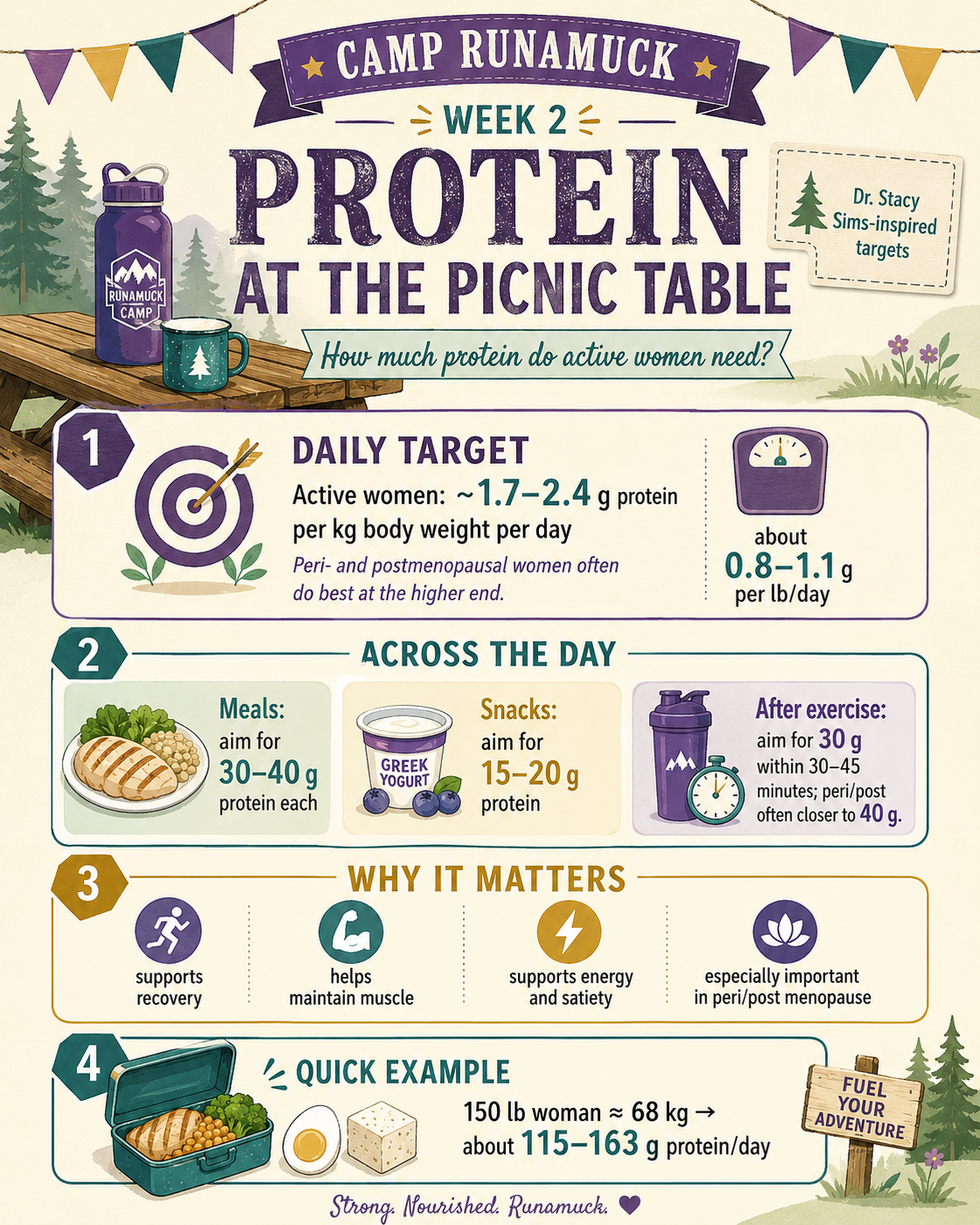
Dr. Stacy Sims has suggested that active women may generally aim for around 1.7 to 2.4 grams of protein per kilogram of body weight per day, with women in the menopause transition often targeting the higher end of that range depending on training load and individual needs.
For those of us who think in pounds, that is roughly 0.8 to 1.1 grams of protein per pound of body weight per day.
Let’s make that less abstract.
A 150-pound woman is about 68 kilograms.
Using that range, her protein target may land around:
115 to 163 grams of protein per day
That may sound like a lot if you are currently eating much less, and that is okay. You do not need to jump from “accidentally eating 55 grams a day” to “protein picnic champion” overnight. The goal is not to panic. The goal is to start noticing where protein can be added in ways that are realistic, satisfying, and supportive.
Protein Timing: Spread It Out Like a Good Camp Picnic
One of the most useful shifts is to stop saving most of your protein for dinner. Your body benefits from having protein distributed across the day. That means breakfast matters. Lunch matters. Snacks can matter. Post-workout recovery matters.
A helpful starting point for many active women is:
Meals: aim for around 30 to 40 grams of protein
Snacks: aim for around 15 to 20 grams of protein
Post-workout: aim for around 30 grams, and closer to 40 grams for women in peri/postmenopause after harder sessions
This does not mean every meal has to be perfect. It means you want enough protein at each eating opportunity to actually move the needle. A sprinkle of nuts on a salad is lovely, but it may not be a full protein serving. A spoonful of peanut butter on toast is delicious, but it is not the same as 30 grams of protein. Hummus is wonderful, but the portion matters. We are not judging these foods. We are simply being honest about what job they can realistically do.
Protein timing becomes especially important around workouts. After harder, longer, or strength-based sessions, protein helps support muscle repair and adaptation. Pairing protein with carbohydrates after exercise can help replenish energy and support recovery. That might look like a smoothie with protein and banana, Greek yogurt with berries and granola, eggs with toast and fruit, a rice bowl with tofu or chicken, cottage cheese with fruit, or a turkey wrap.
If your workout was short and easy, your next regular meal may be enough. If your workout was longer, harder, sweaty, or strength-focused, a more intentional recovery meal or snack can help. This is not about earning food. This is about recovery supplies. You would not try to rebuild a cabin with glitter glue and best wishes. Your muscles deserve actual materials.
Breakfast: The Protein Opportunity Many Women Miss
Breakfast is one of the biggest opportunities for active women, especially in midlife. Many women start the day with coffee, maybe toast, maybe a bar, maybe nothing, and then wonder why energy, hunger, and recovery feel off later. If that is you, you are not alone. But you may be missing a chance to support your body early.
A protein-forward breakfast can help set the tone for the day. It can support satiety, help with recovery from morning workouts, and make it easier to reach your daily protein goal without trying to cram a heroic amount into dinner. For women in perimenopause and postmenopause, breakfast protein may be especially helpful because muscle maintenance and recovery require more intentional support.
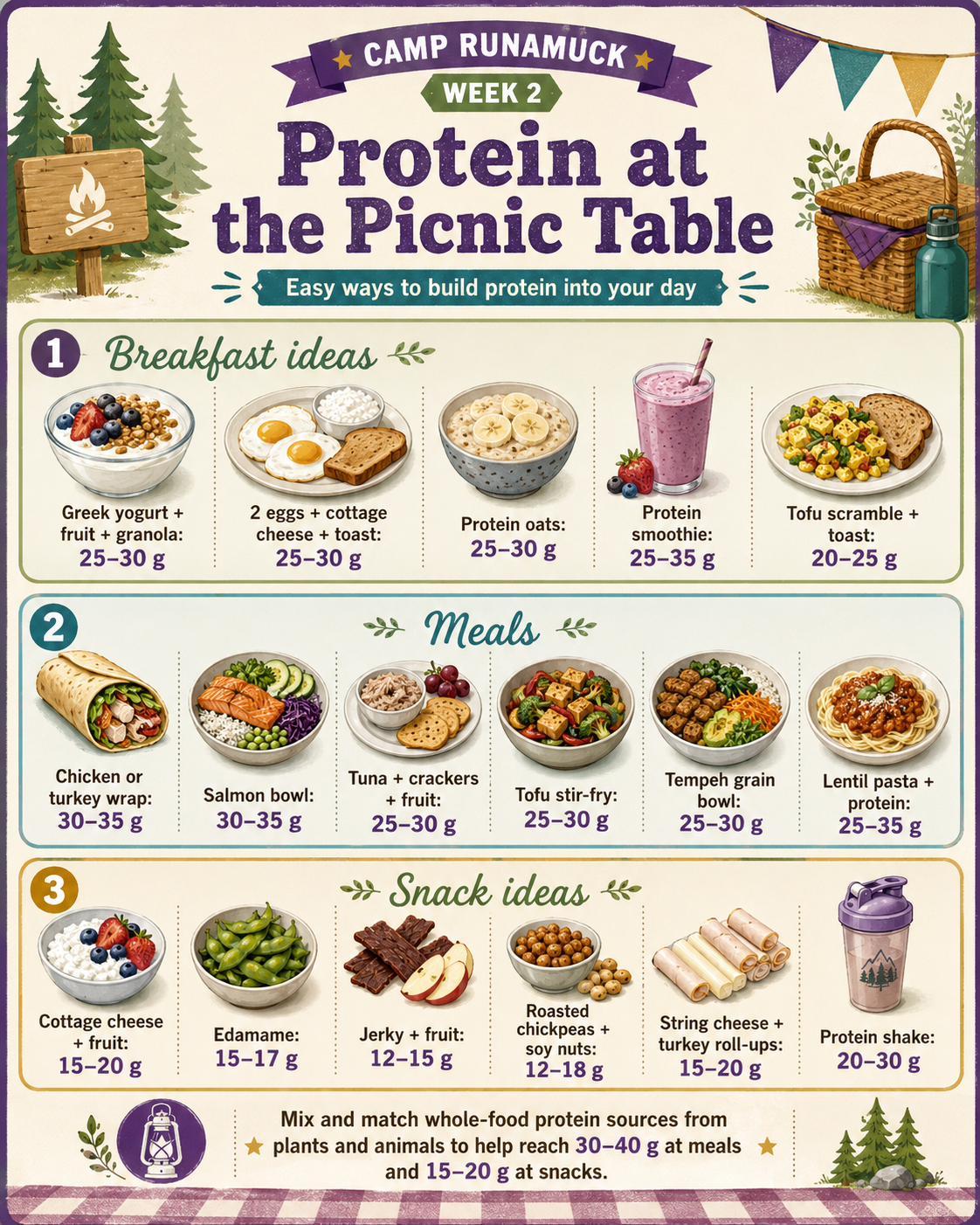
Easy options include Greek yogurt with fruit and granola, eggs with cottage cheese and toast, protein oats, a smoothie with protein powder and fruit, tofu scramble with toast, or cottage cheese with berries. If your appetite is low in the morning, start smaller. You do not have to eat a giant camp breakfast if your body is not ready. You can start with a smoothie, protein coffee, Greek yogurt, or half a breakfast and build from there.
One of the best questions to ask is: “What would make breakfast more supportive without making my morning harder?”
That is the sweet spot.
Whole-Food Protein Ideas: Plants, Animals, and Everything in Between
Protein does not need to come from one type of food. You can build protein from animal sources, plant sources, dairy, seafood, soy, eggs, legumes, grains, seeds, and protein supplements when helpful. The best approach is the one that fits your preferences, ethics, digestion, budget, schedule, and goals.
Animal-based protein options include eggs, Greek yogurt, cottage cheese, chicken, turkey, lean beef, fish, tuna, salmon, shrimp, milk, kefir, and cheese. These foods tend to be protein-dense and often contain all essential amino acids in strong amounts. They can make it easier to reach 30 to 40 grams at a meal.
Plant-based and plant-forward protein options include tofu, tempeh, edamame, beans, lentils, chickpeas, soy milk, pea protein, seitan, quinoa, nuts, seeds, nut butters, and higher-protein grains or pastas. Some plant proteins are less protein-dense per serving, which means you may need larger portions or smart combinations. That does not make them inferior. It just means we need to build the plate with intention.
A plant-centered approach can be powerful for active women because it brings fiber, micronutrients, antioxidants, and gut-supportive foods along for the ride. Dr. Sims has also written about plant-centered eating as a strong foundation for health and performance while noting that “plant-centered” does not necessarily mean exclusively plant-based. I love that distinction because it makes room for flexibility. Your plate can include plants and still include eggs, yogurt, fish, turkey, or whatever protein sources work best for you.
The Camp Runamuck goal is not to choose a protein team and defend it with a canoe paddle. The goal is to build meals and snacks that support your body.
The easiest way to increase protein is not always to overhaul your entire life. It is often to upgrade what you already eat.
If you already eat oatmeal, add Greek yogurt, protein powder, chia, hemp hearts, milk, or cottage cheese on the side. If you eat toast, add eggs, cottage cheese, smoked salmon, tofu scramble, or turkey. If you like smoothies, add protein powder, Greek yogurt, soy milk, or cottage cheese. If you eat salads, add chicken, tuna, salmon, tofu, tempeh, edamame, beans, lentils, hard-boiled eggs, or a grain with more protein.
If lunch is your protein weak spot, use formulas. A wrap with turkey or tofu, a bowl with rice and salmon, a salad with chicken and beans, lentil pasta with sauce and protein, tuna and crackers with fruit, or leftovers with an added protein can all work. You do not need a Pinterest lunch. You need a lunch that helps you get through the afternoon without trying to chew your own arm off.
Snacks can help too. Try cottage cheese and fruit, edamame, jerky and fruit, roasted chickpeas, string cheese and turkey roll-ups, Greek yogurt, a protein shake, hummus with veggies plus another protein, or a boiled egg with crackers. A snack does not have to be massive. It just needs to help you bridge the gap.
And yes, protein powders can be useful. They are not mandatory, but they can be convenient, especially for busy mornings, post-workout recovery, travel, or when appetite is low. Whey, pea, soy, and other protein powders can all fit depending on your tolerance and preferences. Whole foods matter, but convenience is not a character flaw. Sometimes a shaker bottle is the difference between recovering well and wandering around camp like a hungry ghost.
What If More Protein Feels Hard?
If increasing protein feels hard, start with one meal. Breakfast is often the best place. Instead of trying to hit a full daily target immediately, ask: “Can I add 10 more grams at breakfast?” Once that feels normal, build lunch. Then snacks. Then post-workout recovery.
If appetite is low, use smaller portions more often. Try smoothies, yogurt bowls, protein coffee, cottage cheese, eggs, tofu, or snack plates. If digestion is sensitive, increase slowly and pay attention to what sources sit well. If you eat mostly plant-based, plan intentionally so you are getting enough total protein and enough variety. If you are unsure what is right for your body or you have kidney disease or medical nutrition concerns, work with your doctor or a registered dietitian.
This is not a race to the highest protein number. This is about supporting your training and your life. You are not failing if you need time to build the habit. You are learning. That counts.
Coach Christine’s Week 2 Challenge
This week, choose one protein upgrade.
Not twelve. Not a complete kitchen renovation. One.
Try one of these:
Add protein to breakfast.
Have a protein and carb recovery snack after a harder workout.
Build one snack with 15 to 20 grams of protein.
Prep one protein option for the week.
Add tofu, chicken, tuna, eggs, beans, edamame, or Greek yogurt to a meal.
Try protein oats, a smoothie, cottage cheese, or a turkey wrap.
Make your lunch more satisfying by adding a clear protein source.
Then notice what happens.
Do you feel fuller?
Do you recover better?
Do you feel less snacky later?
Do you have steadier energy?
Do workouts feel better when recovery improves?
Does breakfast protein change your afternoon?
That is the point of Week 2. We are not chasing perfect macros. We are collecting feedback from your body and building meals that support the woman doing the work.
Protein gets a seat at the picnic table because you are asking your body to show up. Your body deserves support when it does.
Strong campers fuel. Strong campers recover. Strong campers also know that snacks matter.